
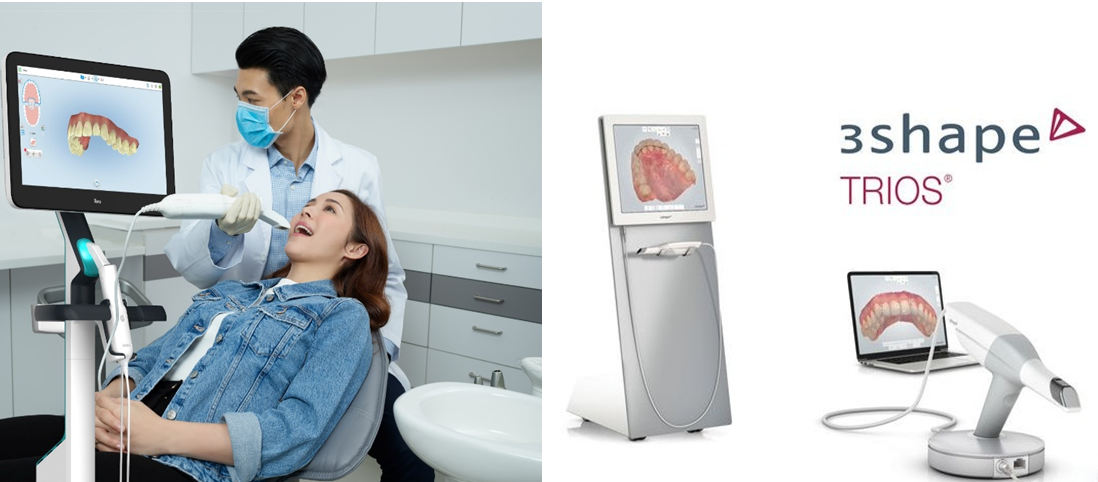
Digital dentistry is rapidly advancing with many clinics internationally turning fully digital in their approach relying highly upon AI and other digital softwares. Digital dentistry involves several steps that integrate advanced technologies to enhance the accuracy, efficiency, and outcomes of dental procedures. Here are the key steps involved in digital dentistry:
1. Digital Imaging and Scanning:
- Intraoral Scanning:
- Process: Utilizes handheld scanners to capture precise 3D images of the teeth and oral structures.
- Purpose: Replaces traditional putty impressions, providing digital models for various dental applications such as crowns, bridges, and aligners.


- Extraoral Scanning:

- Process: Captures detailed images of the entire dental anatomy, including the face and jaw.
- Purpose: Used for designing and fabricating complex dental restorations and prosthetics, like full arch restorations or implants.
2. Computer-Aided Design (CAD):
- CAD Software:
- Process: Allows dentists to digitally design restorations based on the scanned images and patient specifications.
- Applications: Design of crowns, veneers, bridges, dentures, and orthodontic appliances with precise measurements and customization.
3. Computer-Aided Manufacturing (CAM):
- CAM Technology:
- Process: Transfers CAD designs to milling machines or 3D printers for fabrication of dental restorations.
- Applications: Produces custom-fit crowns, bridges, dentures, and other prosthetics with high precision and efficiency.

4. Digital Radiography:
- Digital X-Rays:
- Process: Captures digital images of the teeth and jawbone, offering instant viewing and enhanced diagnostic capabilities.
- Benefits: Reduces radiation exposure, allows for image enhancement, and facilitates easier storage and retrieval of patient records.
- CBCT (Cone Beam Computed Tomography):
- Process: Generates detailed 3D images of the teeth, bone, nerves, and soft tissues.
- Applications: Essential for precise treatment planning in dental implants, oral surgery, orthodontics, and endodontics.


5. Virtual Surgical Planning:
- Software Integration:
- Process: Combines digital imaging and software to plan complex dental surgeries and treatments.
- Benefits: Enhances accuracy, predicts surgical outcomes, and facilitates better communication between dental teams and patients.

6. Digital Smile Design (DSD):
- Concept and Planning:
- Process: Integrates photography, videography, and DSD software to design and visualize cosmetic dental treatments.
- Applications: Allows patients to see potential smile outcomes and guides treatment decisions in veneers, teeth whitening, and smile makeovers.

7. Tele dentistry:
- Remote Consultations:
- Process: Utilizes telecommunications technology to provide remote consultations, diagnosis, and treatment planning.
- Benefits: Improves access to dental care, especially in underserved areas, and enhances communication between dentists and patients.
8. Integration and Collaboration:
- Team Collaboration:
- Process: Facilitates communication and collaboration between dental specialists, laboratories, and patients.
- Benefits: Ensures cohesive treatment planning, precise execution of procedures, and comprehensive patient care.
Conclusion:
Digital dentistry encompasses a range of advanced technologies that transform traditional dental practices into more efficient, precise, and patient-friendly processes. By integrating digital imaging, CAD/CAM systems, digital radiography, virtual planning tools, and communication platforms, dental professionals can deliver personalized, high-quality care that meets modern standards of dental excellence. Embracing digital dentistry not only enhances clinical outcomes but also improves patient satisfaction and overall practice efficiency in the evolving field of dental healthcare.