
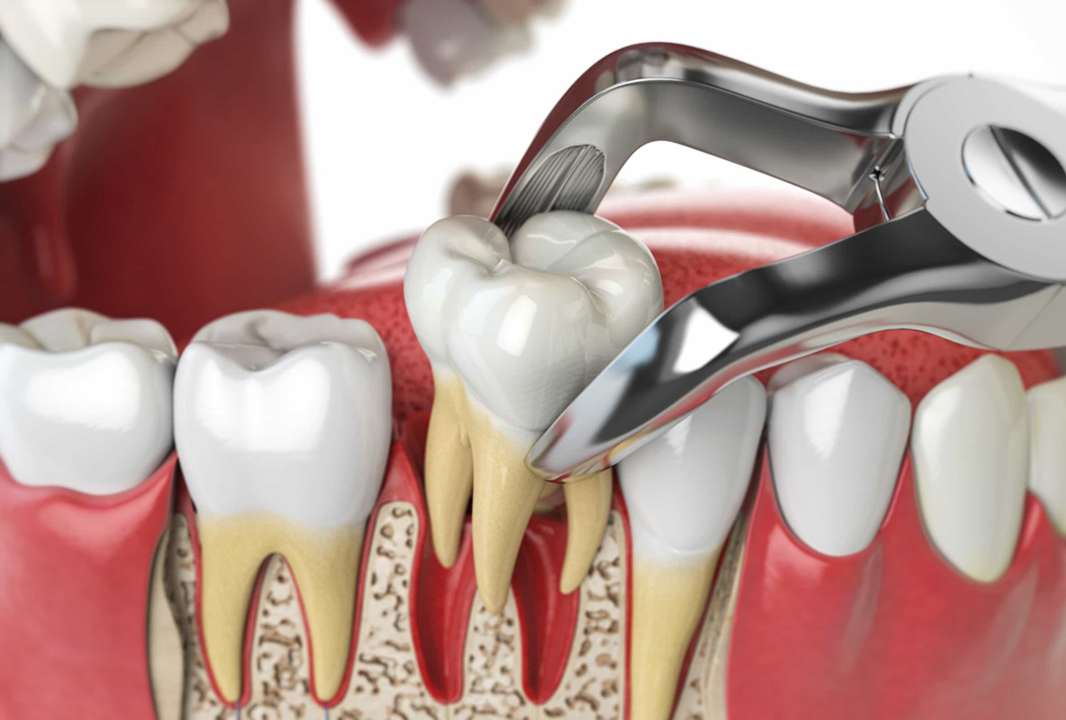
An extraction, in dental terms, refers to the removal of a tooth from its socket in the bone. This procedure is typically performed by a dentist or an oral surgeon under local anesthesia, although sedation options may be available for more complex cases or for patients with dental anxiety.
There are several reasons why a tooth extraction may be necessary:
- Severe Tooth Decay: When a tooth is extensively decayed and cannot be restored with a filling or crown, extraction may be the only viable option to prevent the spread of infection to other teeth.
- Gum Disease: Advanced periodontal (gum) disease can cause the supporting tissues and bone around a tooth to deteriorate, leading to loosening of the tooth. In such cases, extraction may be needed to improve oral health.
- Impacted Wisdom Teeth: Wisdom teeth, also known as third molars, may become impacted (trapped in the jawbone or gums) due to lack of space in the mouth. Impacted wisdom teeth can cause pain, swelling, and damage to adjacent teeth, necessitating extraction.
- Orthodontic Reasons: Sometimes, teeth may need to be extracted to create space for orthodontic treatment, such as braces. This can help align the remaining teeth properly and improve overall bite alignment.
- Fractured or Broken Teeth: Teeth that are severely fractured or broken beyond repair may need to be extracted to prevent further damage and to alleviate pain or infection.
- Supernumerary Teeth: Occasionally, extra teeth may develop, which can interfere with the alignment of other teeth. Extraction may be recommended to prevent dental crowding and alignment issues.

The extraction procedure involves loosening the tooth within its socket using specialized instruments, followed by gently removing it. After extraction, the dentist may place stitches to close the extraction site, depending on the case. Patients are typically advised to follow post-operative care instructions to promote healing and prevent complications.
In cases where a tooth is extracted, options for replacing the tooth may include dental implants, bridges, or dentures, depending on the patient's preferences and dental health considerations.
The extraction of a tooth is a common dental procedure performed by dentists or oral surgeons. Here's a detailed step-by-step outline of what typically happens during a tooth extraction:

1. Initial Examination and X-rays
- Diagnosis: The dentist examines the tooth and surrounding area to determine if extraction is necessary. This may involve checking for decay, infection, gum disease, or the position of impacted teeth.
- X-rays: If necessary, X-rays are taken to assess the tooth's root structure, its relationship with neighbouring teeth, and the condition of the surrounding bone.
2. Anesthesia Administration
- Local Anesthesia: Most extractions are performed under local anesthesia, which numbs the tooth and surrounding area. The dentist may administer the anesthesia via injection near the tooth to ensure the patient is comfortable and feels minimal pain during the procedure.
- Sedation Options: In some cases, sedation techniques such as oral sedatives, nitrous oxide (laughing gas), or intravenous (IV) sedation may be used, especially for more complex extractions or for patients with anxiety.
3. Tooth Extraction Procedure
- Loosening the Tooth: Using specialized instruments called elevators and forceps, the dentist gently loosens the tooth within its socket. The dentist rocks the tooth back and forth to widen the socket for easier removal.
- Extraction: Once sufficiently loosened, the tooth is carefully removed from its socket. The dentist may need to apply firm, controlled pressure to extract the tooth completely.


4. Post-Extraction Care
- Cleaning the Extraction Site: Any debris or infection around the tooth is cleaned out thoroughly.
- Possible Stitches: Depending on the case, the dentist may place dissolvable stitches to close the gum tissue over the extraction site to aid in healing.
- Gauze Placement: Gauze is typically placed over the extraction site to control bleeding and to help a blood clot form.
- Post-Operative Instructions: The dentist provides detailed instructions on how to care for the extraction site at home, including:
- Bite on Gauze: Patients are instructed to bite down on a piece of gauze for a period to control bleeding.
- Pain Management: Over-the-counter pain relievers or prescription medications may be recommended to manage discomfort.
- Ice Packs: Applying ice packs to the outside of the face near the extraction site can help reduce swelling.
- Eating and Drinking: Patients may be advised to avoid certain foods and drinks, especially hot liquids, until the area heals.
- Avoiding Strenuous Activities: Activities that could dislodge the blood clot or interfere with healing are typically discouraged.
5. Follow-Up Appointment
- Check-Up: A follow-up appointment may be scheduled to monitor healing and ensure there are no complications.
6. Aftercare and Recovery
- Healing Process: The extraction site will gradually heal over the following days and weeks. New bone and gum tissue will eventually fill in the socket left by the extracted tooth.
- Dietary Adjustments: Patients may need to temporarily modify their diet to softer foods to avoid putting pressure on the extraction site.
- Resuming Normal Activities: Most patients can resume normal activities within a day or two, though strenuous activities should be avoided until healing is well underway.

Potential Complications
- Dry Socket: In some cases, the blood clot at the extraction site can dislodge prematurely, leading to a condition known as dry socket, which may require additional treatment.
- Infection: Although rare, infections can occur at the extraction site. Patients are instructed on signs of infection to watch for and when to seek prompt dental care if concerns arise.
Overall, tooth extraction is a routine procedure designed to alleviate pain, prevent infection, and restore dental health. Dentists take every precaution to ensure patient comfort and safety throughout the extraction process.
