
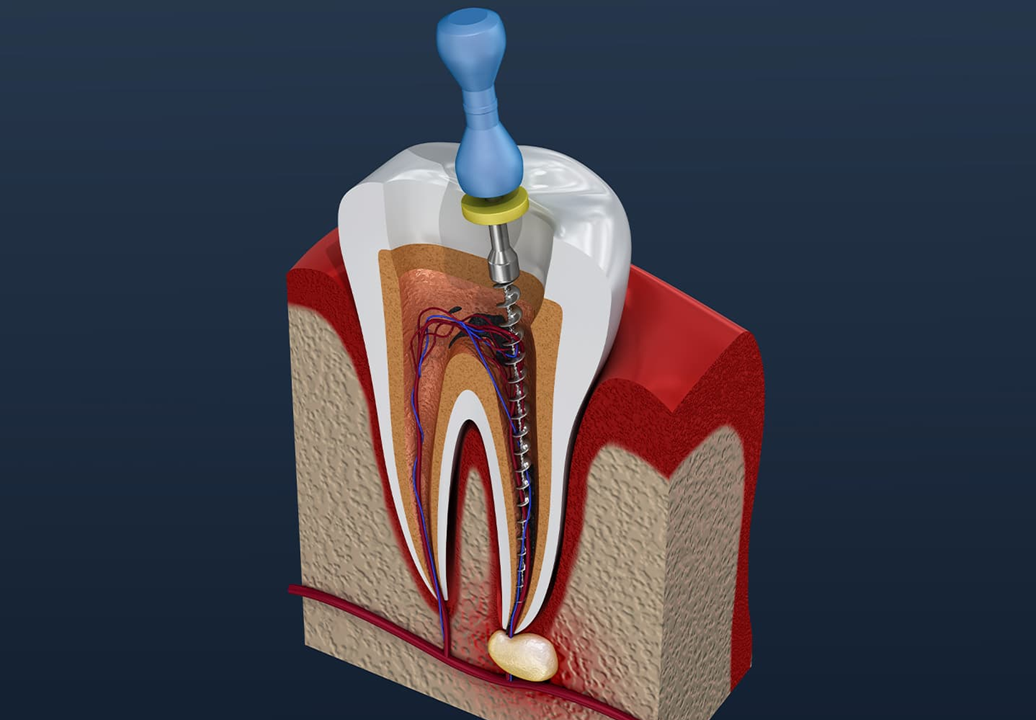
Root Canal Treatment (RCT) or Endodontic Treatment, is a dental procedure done when tooth decay reaches the pulp (innermost layer of the tooth), causing inflammation. It is necessary to save the damaged tooth to prevent extraction. An endodontist (Root Canal specialist) performs this procedure. The procedure involves.
- Removal of inflamed or infected Tooth Material.
- Cleaning and disinfection.
- Fill and seal with an inert material.
- Restoration and crown/cap.

Undergoing a root canal procedure may seem daunting, but understanding each step can help alleviate anxiety and prepare you for what to expect. Here’s a step-by-step breakdown of the root canal procedure:
1. Initial Assessment and X-rays
- Diagnosis: Your dentist examines your tooth and reviews X-rays to determine the extent of damage to the pulp (inner tissue).
- Treatment Plan: Based on the assessment, your dentist recommends a root canal if the pulp is infected or inflamed.
2. Anesthesia
- Numbing the Area: Before starting the procedure, the dentist administers local anesthesia to ensure you are comfortable and pain-free during the treatment. At NOVORIS we use the three-step protocol to anesthetize the tooth so that even the anesthesia is painless.
3. Isolation with Rubber Dam
- Protecting Surrounding Area: A rubber dam is placed around the tooth to isolate it from saliva and keep it clean and dry during the procedure. Alternatively cotton roll and retractor with suction tip can also be used sometimes for isolation and keeping it dry and clean.
4. Creating Access
- Opening the Tooth: The dentist creates a small access hole in the tooth's crown (top part) to reach the pulp chamber and root canals.
5. Cleaning and Shaping
- Removing Infected Tissue: Using specialized instruments, the dentist removes the infected or inflamed pulp tissue from the pulp chamber and root canals.
- Shaping the Canals: The dentist carefully shapes the canals to prepare them for filling.
6. Irrigation
- Cleaning the Canals: The canals are thoroughly cleaned with irrigation solutions to remove debris and disinfect the area.
7. Filling
- Sealing the Canals: Once cleaned and shaped, the canals are filled with a biocompatible material called gutta-percha. This material seals the canals to prevent future infection.

8. Restoration
- Closing the Access Hole: After filling the canals, the access hole in the tooth’s crown is sealed with a temporary or permanent filling.
- Post-Core Buildup (if needed): Depending on the tooth's condition, a buildup material may be placed to support a crown.
9. Final Restoration
- Placing a Crown: In most cases, a tooth that has undergone a root canal will need a crown to protect it and restore its function and appearance.
10. Post-Procedure Care
- Recovery: You may experience some mild discomfort or sensitivity after the procedure, which can usually be managed with over-the-counter pain relievers.
- Follow-up: Attend follow-up appointments as recommended by your dentist to monitor healing and ensure the tooth is healthy.

Conclusion
Understanding the steps involved in a root canal procedure can help you feel more prepared and informed. Remember, modern techniques and anesthesia make root canals much more comfortable than their reputation suggests. If you have any concerns or questions, don’t hesitate to discuss them with us. Connect now and get your root canal done painlessly.