
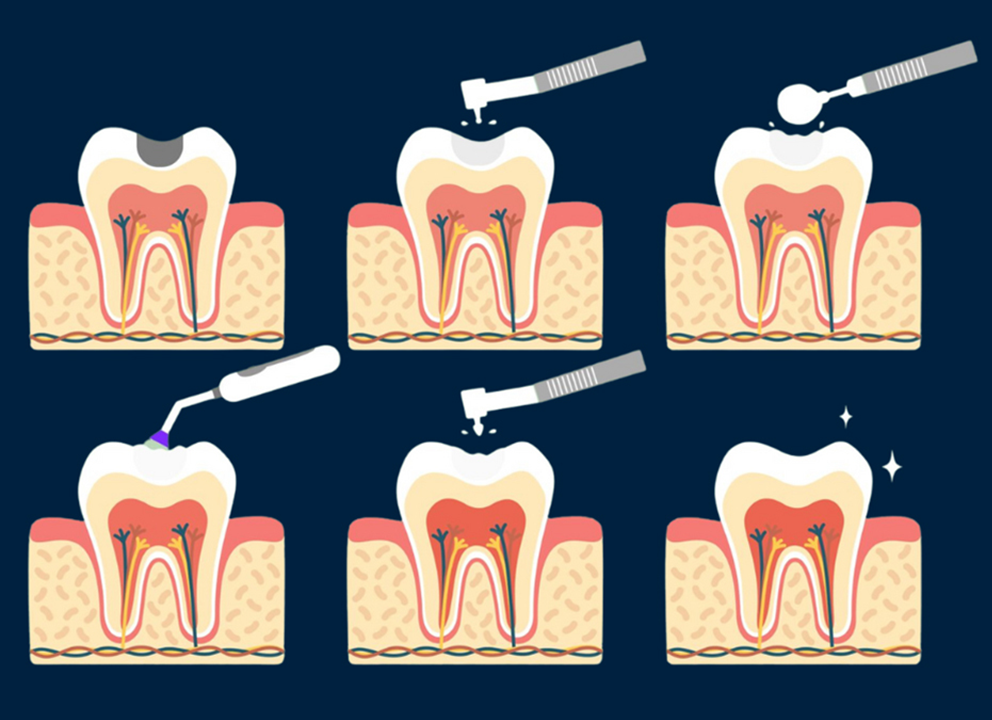
Dental Filling, also known as Tooth filling or Cavity filling, is a restorative dentistry treatment modality used to address tooth decay and structural damage issues. This procedure involves filling missing or decayed tooth structures with different materials. Tooth cavity treatment improves the function of the teeth, strengthens weakened teeth, and preserves tooth structure.
The tooth structure is usually destroyed due to tooth decay or trauma. A Dental Filling helps to fill this gap and protect it from further decay. It is also used to repair broken or cracked teeth that can wear off because of dental habits like teeth grinding and nail-biting.

The placement of a composite filling involves several steps to restore a tooth affected by decay or damage. Composite fillings are tooth-colored restorations made of a mixture of plastic resin and glass particles. They are popular for their aesthetic appeal and ability to blend seamlessly with natural tooth color. Here’s a step-by-step procedure for placing a composite filling:
1. Preparation:
- Anesthesia: The dentist administers local anesthesia to numb the tooth and surrounding tissues. This ensures the patient's comfort during the procedure. However, this is done only if there is sensitivity or pain during the procedure which is rare unless the cavity is deep.
- Isolation: A rubber dam or dental isolation device may be placed around the tooth to keep it dry and isolated from saliva. This prevents contamination and ensures optimal bonding of the filling material. Sometime cotton rolls and retractor are also used along with suction tips.
2. Removal of Decay or Damage:
- Decay Removal: Using a dental drill or laser, the dentist removes the decayed or damaged portion of the tooth. The area is cleaned thoroughly to eliminate bacteria and debris.
3. Tooth Preparation:
- Etching: The dentist applies an etching gel or liquid to the prepared tooth surface. This creates a rough surface texture that helps the composite material bond securely to the tooth.
- Bonding Agent Application: A bonding agent is applied to the etched tooth surface. This adhesive material strengthens the bond between the composite filling and the tooth structure.
4. Placement of Composite Resin:
- Layering: The composite resin material, which matches the shade of the natural tooth, is applied in layers to the prepared tooth. Each layer is cured (hardened) with a special dental curing light before the next layer is applied.
- Shaping and Sculpting: Once all the layers are in place, the dentist sculpts the composite material to achieve the desired shape and contour. This includes ensuring proper bite alignment and smooth margins that blend seamlessly with the surrounding tooth structure.
5. Final Steps:
- Curing: After shaping the composite filling, a curing light is used to harden (cure) the material. This process typically takes a few seconds for each layer.
- Final Adjustments: The dentist trims and polishes the composite filling to ensure a smooth surface that feels natural in the mouth and does not interfere with the bite.
6. Evaluation and Completion:
- Bite Check: The dentist checks the patient's bite to ensure that the filling does not interfere with the opposing teeth during chewing.


- Final Polish: The composite filling is polished to achieve a smooth finish and enhance its appearance making it glossy and unrecognizable.
7. Aftercare:
- Sensitivity: Some sensitivity to hot and cold temperatures may occur immediately after the procedure, but it typically subsides within a few days.
- Regular Check-ups: Maintain regular dental check-ups to monitor the integrity of the filling and ensure oral health.

Composite fillings provide a durable and aesthetic solution for restoring teeth affected by cavities or minor damage. With proper care and maintenance, composite fillings can effectively restore the function and appearance of teeth while blending seamlessly with natural tooth structure. At NOVORIS we use the best dental composite brands and materials from IVOCLAR and 3M (both of which are gold standard in dentistry) ensuring you get the best dental filling treatment. Connect with us to know more about dental composite fillings and whether you need one or not.