
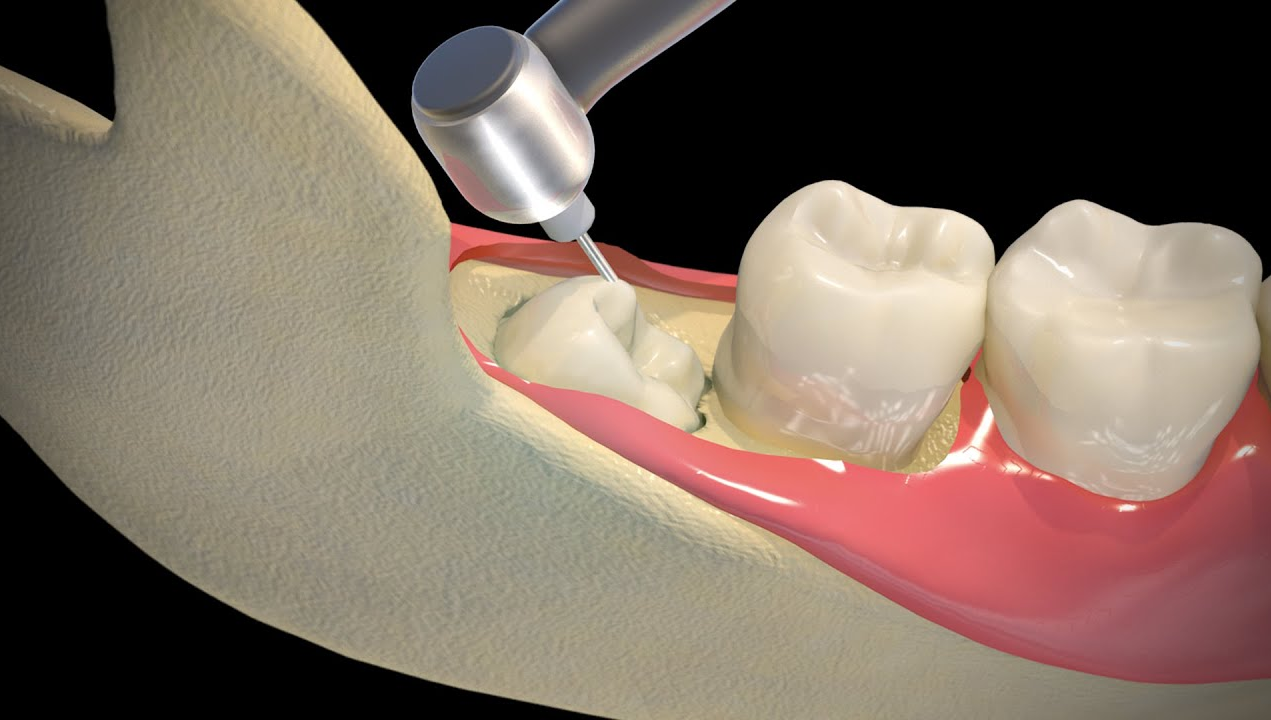
The removal of impacted wisdom teeth is a surgical procedure that typically requires more specialized care compared to routine tooth extractions. Here's a detailed step-by-step procedure for impacted wisdom tooth removal:
1. Initial Assessment and Examination
- Consultation: The process begins with a consultation with your dentist or oral surgeon. They will review your medical history, examine your mouth, and may take X-rays or CT scans to assess the position of the impacted wisdom teeth, their roots, and their relationship to nearby structures (like nerves and sinuses).
- Discussion of Options: Based on the assessment, the dentist will discuss whether wisdom tooth removal is necessary and the best approach for your case.

2. Anesthesia and Sedation
- Anesthesia: Local anesthesia is usually administered to numb the affected area around the tooth. This ensures you remain comfortable and pain-free during the procedure.
- Sedation Options: Depending on the complexity of the extraction and your preference, your dentist may recommend additional sedation options such as oral sedatives, nitrous oxide (laughing gas), or intravenous (IV) sedation to help you relax.
3. Surgical Extraction
- Soft Tissue Incision: If the impacted tooth is partially or fully covered by gum tissue, the dentist will make an incision to expose the tooth and bone.
- Bone Removal: In some cases, a small portion of bone covering the tooth may need to be removed to access the tooth properly.

- Tooth Extraction: Using specialized instruments, such as elevators and forceps, the dentist carefully removes the impacted wisdom tooth from its socket. The tooth may need to be sectioned (cut into smaller pieces) to facilitate easier removal, especially if it is impacted deeply or positioned awkwardly.
4. Cleaning and Stitches
- Cleaning the Site: After the tooth is extracted, any debris or infection around the extraction site is cleaned out thoroughly.
- Stitches: Depending on the complexity of the extraction and the dentist's preference, stitches may be placed to close the gum tissue over the extraction site. These stitches may be dissolvable or require removal after a few days.

5. Post-Operative Care
- Gauze Placement: Gauze is placed over the extraction site to control bleeding. You will be instructed to gently bite down on the gauze for a period.
- Pain Management: The dentist may prescribe pain medication or recommend over-the-counter pain relievers to manage discomfort.
- Ice Packs: Applying ice packs to the outside of your face near the extraction site can help reduce swelling.
Post-Operative Instructions: Detailed instructions will be provided on how to care for the extraction site, including:
Dietary Restrictions: Avoiding hot liquids and sticking to softer foods initially.

Oral Hygiene: How to gently clean around the extraction site while it heals.
Activity Restrictions: Avoiding strenuous activities and sports for a few days to allow for proper healing.

6. Follow-Up Appointment
- Monitoring Healing: A follow-up appointment will be scheduled to monitor your healing progress and ensure there are no complications such as infection or dry socket.

Recovery and Consideration
- Healing Process: The extraction site will gradually heal over the following weeks, with new bone and gum tissue filling in the socket left by the extracted tooth.

- Complications: While uncommon, complications such as dry socket (where the blood clot is dislodged), infection, or nerve injury may occur. It's important to follow post-operative instructions and contact your dentist if you experience severe pain, excessive bleeding, or signs of infection.
Conclusion
Impacted wisdom tooth removal is a common surgical procedure aimed at preventing potential dental problems and relieving discomfort. At NOVORIS our dentists and oral surgeons take precautions to ensure patient comfort and safety throughout the procedure, providing personalized care based on individual needs and the complexity of the case.
