
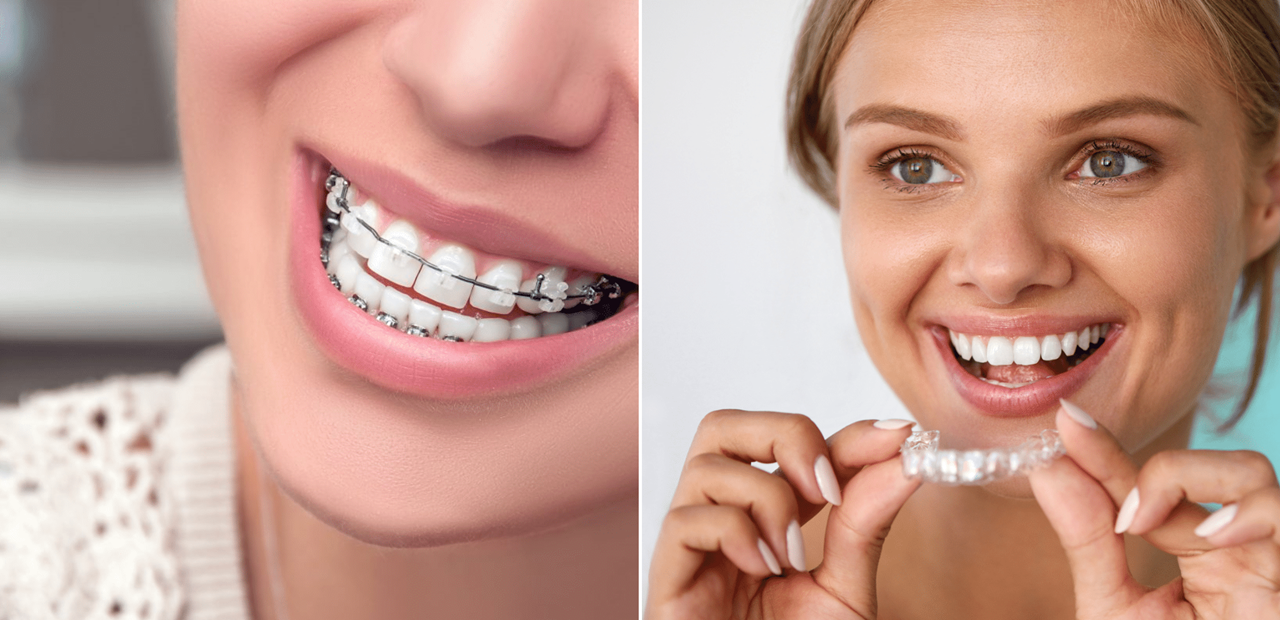
Choosing between Invisalign and conventional dental braces depends on various factors, including your orthodontic needs, lifestyle preferences, and treatment goals.

Here's a comparison between Invisalign and conventional braces to help you make an informed decision:
Invisalign:
- Appearance:
- Clear Aligners: Invisalign uses clear, removable aligners that are virtually invisible when worn, making them a popular choice for those concerned about the appearance of braces.
- Comfort:
- Smooth Plastic: Aligners are made of smooth plastic, which tends to be more comfortable than traditional braces with brackets and wires that can cause irritation and soreness.
- Removability:
- Convenience: Aligners are removable, allowing you to eat and drink without restrictions and to brush and floss normally, promoting better oral hygiene during treatment.
- Treatment Time:
- Similar Duration: Treatment time for Invisalign can be comparable to traditional braces, depending on the complexity of the case and patient compliance with wearing the aligners.
- Adjustment Visits:
- Less Frequent: Invisalign typically requires fewer visits to the dentist or orthodontist for adjustments compared to braces, as aligners are switched out every 1-2 weeks at home. For someone living abroad it is a boon. You hardly need to come back to the office again. Mostly everything can be manged online via teleconsultation and whenever you return the in-office part of the treatment can be planned accordingly.
- Cost:
- Comparable: Invisalign may be slightly more expensive than traditional braces, but costs can vary depending on factors like location and the complexity of the case. Certain cases that are minor can be managed at almost the same cost like that of braces. Only major cases cost can become more than braces.
Conventional Dental Braces:
- Appearance:
- Metal Brackets: Traditional braces use metal brackets and wires that are visible on the teeth, though newer options include tooth-colored ceramic brackets for a less noticeable appearance.
- Comfort:
- Initial Discomfort: Braces can cause initial discomfort and may require adjustments to the wires and brackets periodically throughout treatment.
- Removability:
- Fixed Appliances: Braces are fixed onto the teeth and cannot be removed by the patient until treatment is completed, which may affect eating habits and oral hygiene routines.
- Treatment Time:
- Effective for Complex Cases: Braces are effective for treating severe orthodontic issues, including correcting rotations and aligning teeth with significant crowding or spacing.
- Adjustment Visits:
- Regular Visits: Braces require regular visits to the orthodontist for adjustments and tightening of wires to gradually move teeth into the desired position.
- Cost:
- Cost-Effective Option: Traditional braces are often more cost-effective than Invisalign, making them a preferred choice for many patients and orthodontists.
Choosing Between Invisalign and Braces:
- Complexity of Treatment: Invisalign is suitable for mild to moderate orthodontic issues, while traditional braces are effective for more complex cases.
- Lifestyle Considerations: Invisalign's removability and nearly invisible appearance make it preferable for adults and teens who prefer a less noticeable treatment option.
- Compliance: Successful treatment with Invisalign requires consistent wear of aligners for 20-22 hours per day, which may be challenging for some patients.
- Cost and Insurance Coverage: Insurance coverage and financial considerations may influence your choice between Invisalign and traditional braces.

Conclusion:
Both Invisalign and conventional dental braces are effective orthodontic treatments for straightening teeth and improving oral health. Your dentist or orthodontist can help you decide which option is best suited to achieve your desired results based on your individual needs, preferences, and orthodontic goals.